Capturing the Taj Mahal as the first rays of dawn pierce the Yamuna morning mist is an experience coveted by photographers worldwide. However, turning this vision into an award-winning photograph requires knowing the exact secret vantage points, minute-by-minute lighting transitions, and navigating the strict Archaeological Survey of India (ASI) regulations.
At TajMahal.City, our certified government-licensed photography guides have spent decades studying how light interacts with the translucent Makrana marble. Below is our definitive field guide to the 10 best Taj Mahal sunrise photography spots, complete with exact lens recommendations, timing windows, and compositional secrets.
Essential Sunrise Rule: The First 15-Minute Rule
When the security turnstiles swing open 30 minutes before official sunrise, do not stop at the Great Gate (Darwaza-i rauza). Walk at a brisk pace directly toward the central water tank before crowds assemble. This 15-minute window is the only time to capture pristine mirror reflections with zero people in your frame.
Top 10 Sunrise Photography Spots & Perspectives
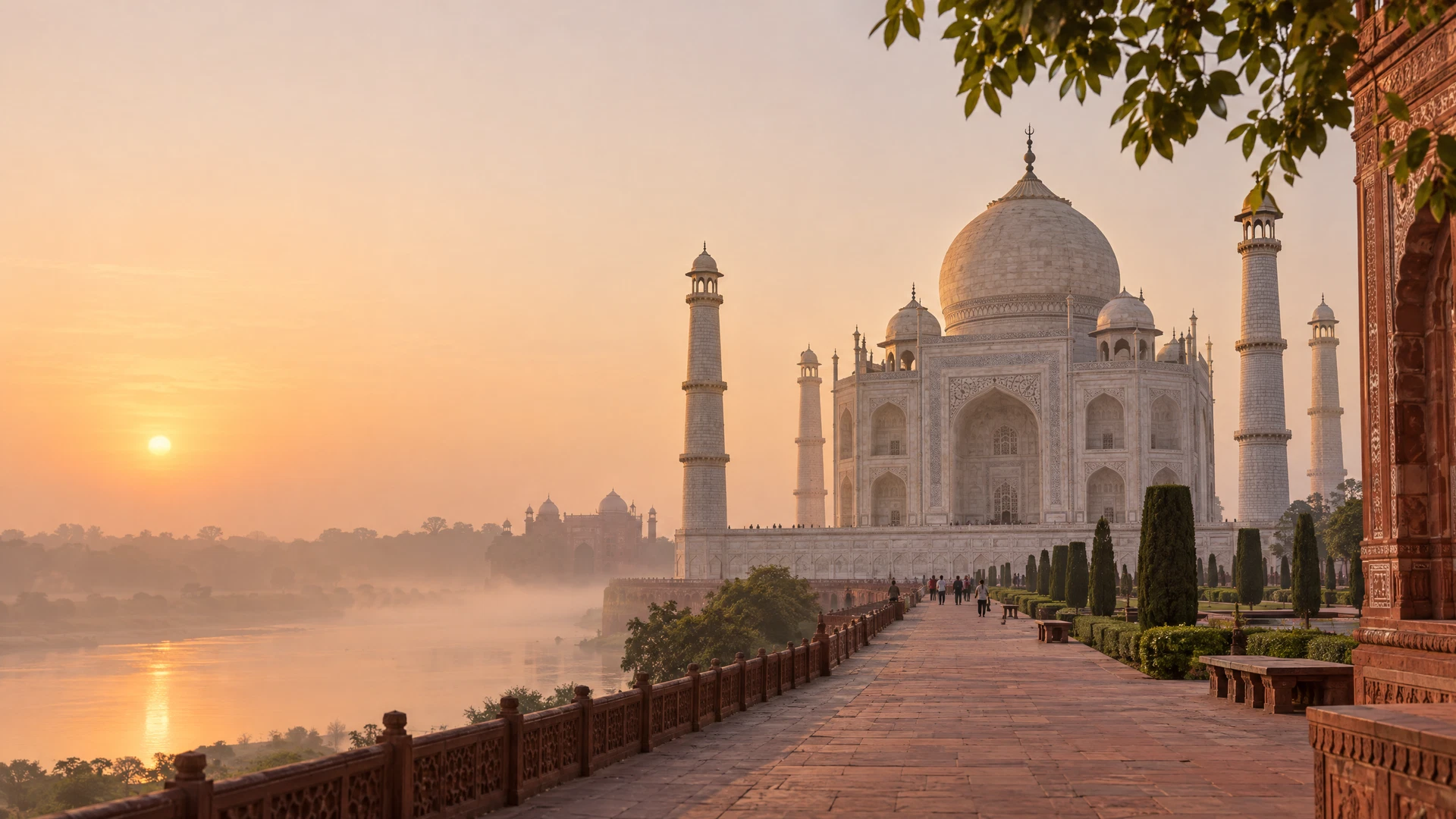 Spot #1 • The Classic Icon
1. The Central Charbagh Water Tank (Hauz-i-Kawsar)
Located halfway between the main Great Gate and the mausoleum, the raised marble water tank (The Celestial Pond of Abundance) offers the world-renowned perfect reflection. At dawn, when the fountain jets are turned off and the wind is calm, the water turns into liquid glass, mirroring the monument and the morning sky in exact mathematical symmetry.
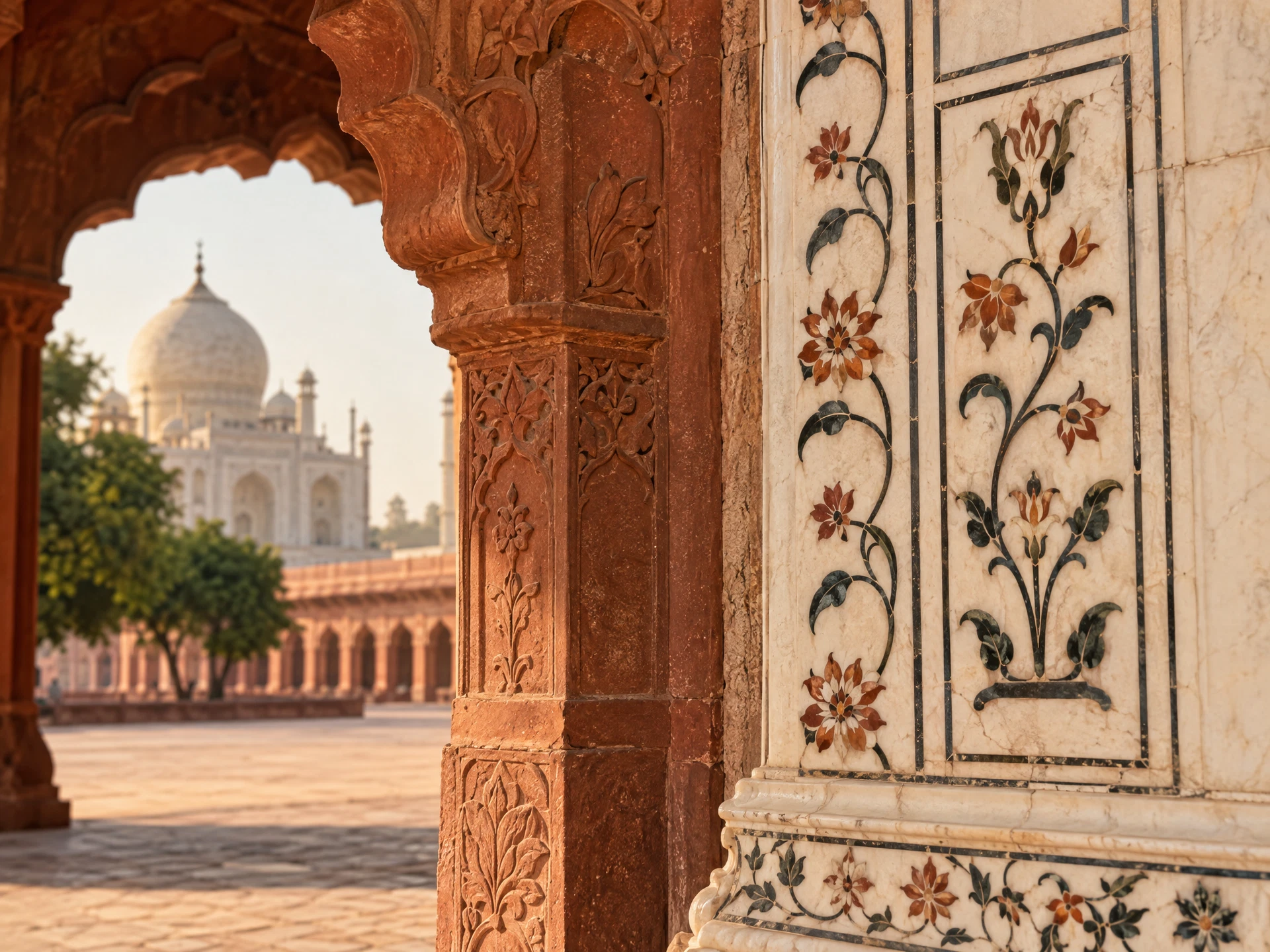 Spot #2 • Architectural Silhouette
2. The Red Sandstone Mosque Archway (Kau Ban Mosque)
To the west of the Taj Mahal stands the magnificent red sandstone mosque facing Mecca. Standing deep inside the cool, shadowy interior of the mosque's arched portal (Pishtaq) allows you to use the deep red carved sandstone arch as a natural frame around the glowing golden white marble of the Taj.
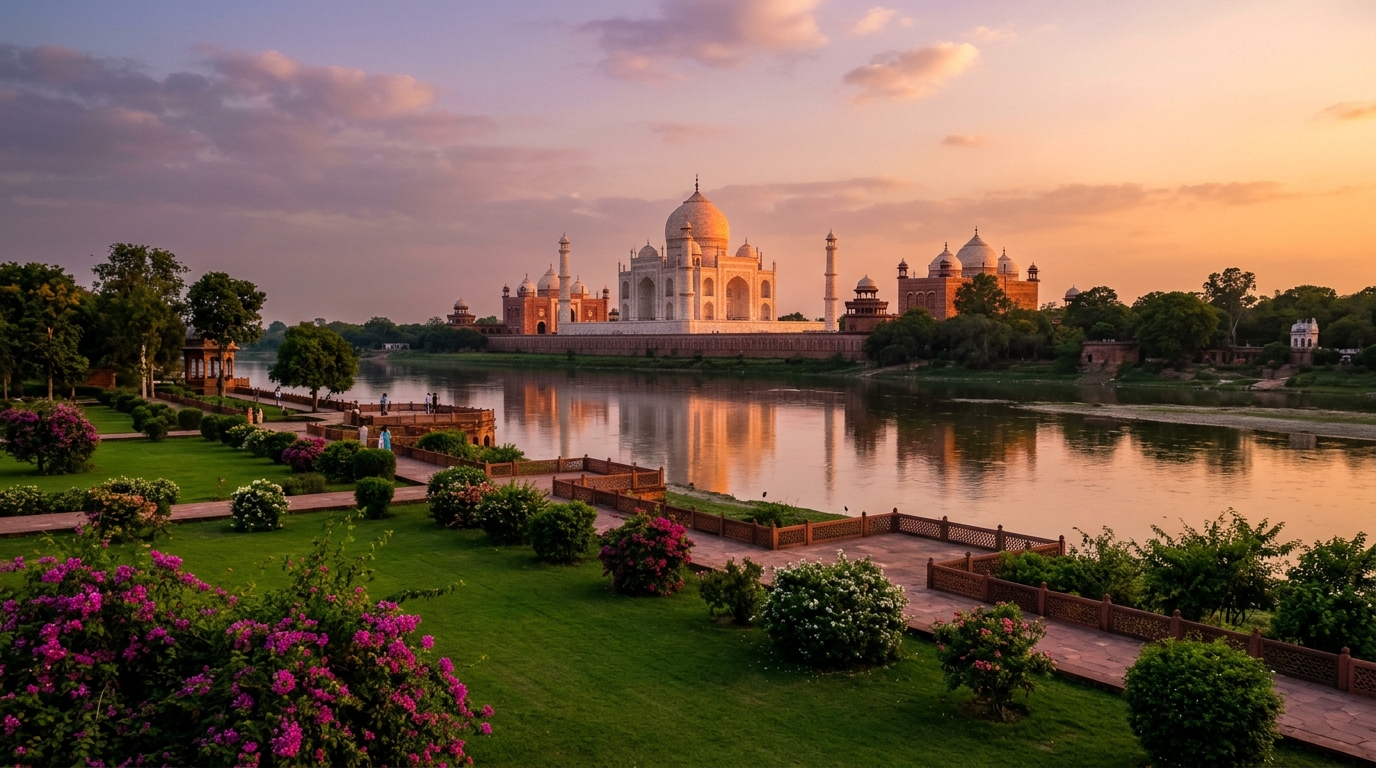 Spot #3 • The River Yamuna Vista
3. Mehtab Bagh (The Moonlight Garden) Across the River
Situated directly on the opposite bank of the Yamuna River, Mehtab Bagh was originally built by Emperor Babur and restored by Shah Jahan as the ultimate viewing pleasure ground. At dawn, you get an uninterrupted, completely crowd-free panoramic perspective of the northern facade and rear octagonal minarets rising over the mist of the river.
4. The Jawab (The Mirror Hall) East Archway
Directly opposite the Mosque on the eastern flank stands the identical red sandstone structure known as the Jawab (Answer), constructed purely for architectural balance. In the morning, as the sun rises in the east, warm golden backlighting spills directly through the Jawab's arches, producing dramatic atmospheric light rays across the marble plinth.
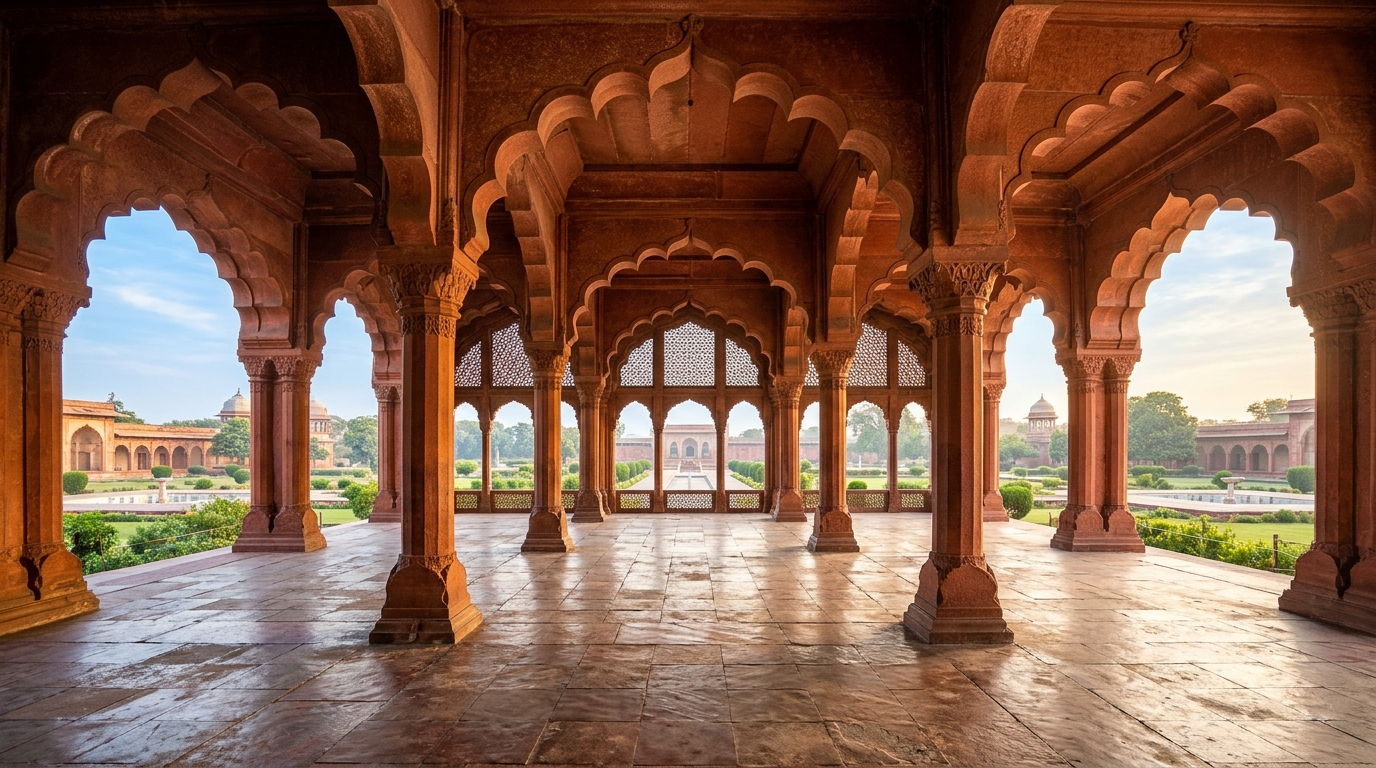 Spot #5 • The Emperor's Gaze
5. Agra Fort's Musamman Burj (Shah Jahan's Balcony)
During the final eight years of his life, Emperor Shah Jahan was imprisoned by his son Aurangzeb in Agra Fort's Musamman Burj (the Octagonal Tower). Looking through the delicately carved marble filigree screen at sunrise offers an emotionally powerful perspective: the Taj Mahal floating like a distant mirage across the Yamuna bend in the morning haze.
6. The Diana Bench & The Lower Plinth Corner Angle
While the famous marble bench visited by Princess Diana in 1992 is often crowded, stepping just 10 paces to either side of the raised platform allows you to capture an angled leading line along the water canals directly to the main dome.
7. The Outer Causeway Garden Canals
Most visitors rush straight down the central axis. The parallel walkways running along the eastern and western cypress lanes offer stunning low-angle views through ancient manicured Mughal flower beds and weeping trees, providing lush natural foreground framing.
8. The Plinth Inlay Macro Angle
Don't forget macro photography! As early sunlight strikes the white marble plinth, the semi-precious stone inlays (Pietra Dura)—lapis lazuli from Afghanistan, carnelian from Arabia, malachite and jade—illuminate with intense color against the crystalline white Makrana surface.
9. Taj Nature Walk Forest Ridge
Located just 500 meters from the East Gate, this 70-hectare nature reserve offers a 20-foot high observation mound. At dawn, you can photograph the Taj Mahal rising majestically above a dense canopy of teak trees, peacock sanctuaries, and natural forest greenery.
10. The Boatman's Water-Level View (Yamuna Shore)
From the southern banks near Dussehra Ghat, authorized local wooden rowboats float along the river perimeter. Watching the Taj Mahal reflected across the river surface as migratory river birds take flight creates an ethereal, painterly image.
Critical ASI Camera & Gear Regulations (2026 Updated)
The Archaeological Survey of India (ASI) and CISF security maintain strict rules at all entrance gates:
- Tripods & Monopods: Strictly prohibited. Do not attempt to bring them inside; you will be turned back to the locker queue.
- Gimbals & Selfie Sticks: Prohibited inside the monument complex. Handheld mobile and camera shooting only.
- Cameras Allowed: All mirrorless and DSLR cameras with standard photography lenses (up to 300mm) are permitted without extra fee.
- Drones: Strictly prohibited. Agra is a high-security defense and heritage airspace (No Fly Zone).
- Spare Batteries & Memory Cards: Permitted in your camera bag. Ensure all electronics are screened through X-ray.
- Bags: Only small camera bags or backpacks under 40x30cm are allowed inside. Large luggage must be deposited at cloakrooms.
Understanding the Marble Color Palette Shift
The true magic of sunrise at the Taj Mahal lies in its optical transformation:
Frequently Asked Questions (FAQ)
Can I bring a tripod into the Taj Mahal for sunrise photography?
No. The Archaeological Survey of India (ASI) strictly prohibits tripods, monopods, selfie sticks, and camera gimbals inside the Taj Mahal complex. Professional DSLR/mirrorless cameras and lenses are allowed without extra permit fees, but all support gear will be confiscated or required to be stored in outer lockers.
What is the best entry gate for sunrise photography at the Taj Mahal?
The East Gate is widely regarded as the best gate for sunrise photography. It is closest to most luxury hotels, generally has faster security processing lines at dawn, and opens directly into the lush eastern gardens of the complex.
What time should I arrive at the gates to get clean sunrise photos?
Arrive at least 45 to 60 minutes before scheduled sunrise (typically 5:15 AM to 5:45 AM depending on the season). Being among the first 20 people through the security turnstiles gives you a 10-15 minute window of virtually empty garden reflecting pools.
Is photography allowed inside the main mausoleum cenotaph chamber?
No photography or videography is permitted inside the central domed octagonal chamber housing the cenotaphs of Emperor Shah Jahan and Empress Mumtaz Mahal. Photography is unrestricted throughout the exterior plinth, gardens, watercourses, and mosques.